
uPVC doors are one of the most popular choices for homes and small commercial properties across the UK. Known for their durability, affordability and low maintenance, they are commonly used as front doors, back doors, patio doors and entrance doors for offices and shops.
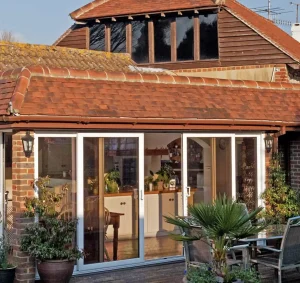
This guide explains exactly what a uPVC door is, how it performs and whether it is the right choice for your property.
What is a uPVC Door?
A uPVC door is a door made primarily from unplasticised polyvinyl chloride (uPVC). Unlike older PVC products, uPVC contains no plasticisers, making it rigid, strong and resistant to warping.
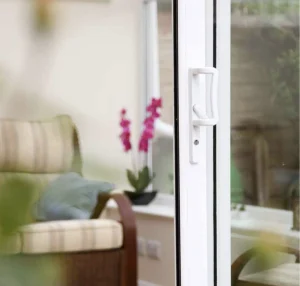
uPVC doors are designed to withstand the British climate while providing good insulation, security and longevity. They are often chosen as a cost‑effective alternative to timber or aluminium doors and are widely available in a range of styles, colours and finishes.
Materials
While the outer layer of the door is made of rigid uPVC plastic, a quality door is more than just a plastic shell. Most modern uPVC doors are constructed with:
- Insulated Cores & Glazed Glass Panels: A core of thermally efficient foam or mdf-reinforced panels for strong insulated performance. These can be double or triple glazed.
- Steel Reinforcement: An internal frame of galvanised steel to provide structural rigidity and prevent warping.
- Weather Seals and Gaskets: To enhance overall weather performance, thereby preventing draughts and water ingress.
- Multi-Chambered Profiles: The frame itself contains multiple air chambers that trap heat and add strength.
The combination of these materials and features is what gives uPVC doors their durability and performance.
Insulative Properties
uPVC is a natural insulator with low thermal conductivity. Because the frames are designed with multiple internal chambers, they are excellent at trapping air and preventing heat from escaping. When paired with modern double or triple glazing, a uPVC door can significantly reduce energy bills and keep the property quiet by blocking out street noise.
Security
uPVC doors are considered highly secure when correctly specified and installed. Security features typically include:
- Multi-point Locking Systems: These bolt the door into the frame at several points (top, middle, and bottom) with a single turn of the key.
- Steel-reinforced Frames: This makes it much harder for an intruder to force the door out of its housing.
- Anti-snap Locks: High-quality cylinders are designed to resist common burglary methods like lock-snapping.
When professionally installed, a uPVC door provides strong resistance against forced entry and meets modern home security expectations.
Fire Resistance
uPVC doors are not fully fire‑proof, but they are generally fire‑retardant. uPVC has a high ignition temperature and is self‑extinguishing, meaning it will not continue to burn once the heat source is removed.
However, standard uPVC doors are not typically rated as fire doors. If fire resistance is a legal requirement in dwellings such as flats or commercial properties, specialist certified fire doors should be used instead.
Heat Expansion
uPVC doors can expand slightly in warm weather as this is a natural property of the material. Nonetheless, high‑quality uPVC doors are designed to accommodate thermal movement through:
- Internal steel reinforcement
- Correct frame tolerances
- Professional installation
Expansion is normally temporary. Once the temperature drops, the door will return to its original size. It is also advisable to choose lighter colours which can help reflect heat and minimise expansion compared to darker shades.
Longevity
When well-maintained uPVC doors are expected to last between 20 and 35 years. Unlike wood, uPVC will not rot, flake or rust. To get the most out of the door, it is important to occasionally wipe it down with soapy water and keep the moving parts (hinges and locks) lightly lubricated.
Cost of Supply
The cost of a uPVC front door varies depending on size, design, glazing and security features. Supply‑only prices typically start from around £450 at FENX Ltd. Installation costs are not included in this figure and will depend on factors such as location, removal of the old door, structural alterations and overall complexity of the installation.
Conclusion
If you are looking for a door that is cost‑effective, energy efficient, secure and low maintenance, a uPVC door is a strong choice for both residential and light commercial use. With a wide range of styles available, they can suit traditional and modern properties alike while delivering long‑term performance.